Beyond Words: Silence as the Highest Expression of Truth


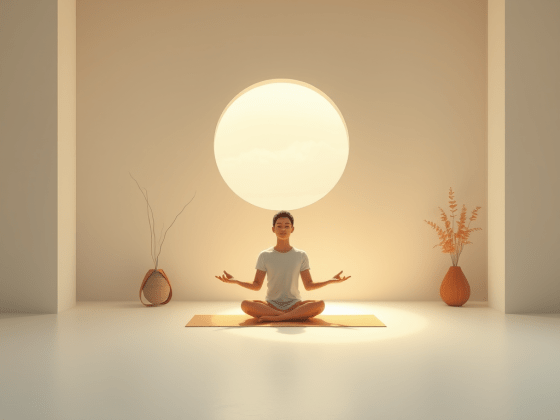
Ramana Maharshi declared, “The only language able to express the whole truth is silence.” In Advaita Vedanta, the Self is beyond knowledge and ignorance, beyond light and darkness. Words divide, but silence holds unity. Ramana’s presence itself was a teaching—those who sat with him often felt peace beyond explanation. Silence is not absence but fullness: the stillness in which the Self shines without obstruction. To abide in this silence is to realize that truth is not something to be reached but what we already are—pure being, ever free. Explore Ramana Maharshi’s teaching that silence is the highest expression of truth in Advaita Vedanta, where words fail but being alone remains.


Hard Problem of Matter & Hard Problem of Consciousness


The “hard problem of matter” asks: what is matter in itself, beyond equations and interactions? Physics describes how particles and fields behave, but not their intrinsic nature. Similarly, the “hard problem of consciousness” asks: why does brain activity produce subjective experience? Both expose a gap between scientific description and lived reality. Across traditions—Vedanta, Buddhism, Western panpsychism, Daoism, and modern physics—the puzzle is the same: are matter and mind two distinct substances, or two faces of the same reality? Exploring these perspectives reveals how ancient wisdom and modern science converge on this profound mystery of existence.

Intelligence Over Materialism: A Path to Contentment


The journey toward inner simplicity is crucial, as true freedom comes from awareness rather than the mere absence of possessions. Outer simplicity may provide some freedom, but it doesn’t guarantee inner peace. An intelligent understanding of one’s relationship with possessions fosters true contentment and societal cooperation without the need for external validation or authority.