
Half-Hearted LivingTime rolls on, unmindfully,While I engage with my dilemmasOn what I should doOr not do, in this world,A world … More
Author: D. Samarender Reddy
Philosopher & Poet. Holds degrees in Medicine (MBBS) and Economics (MA, The Johns Hopkins University). Certified programmer. An avid reader. Worked in various capacities as a medical writer, copywriter, copyeditor, software programmer, newspaper columnist, and content writer. Amazon Author Page - https://www.amazon.in/stores/D.-Samarender-Reddy/author/B0CB7PMW36
28 Sayings of Mine
Paraphrasing Socrates, “Is it right because the Vedas approve it, or the Vedas approve it because it is right.” “Sartre’s … More
Damn the Dusshera
We are too mechanical, too unthinking, doing things because that is how things are supposed to be done, because that … More
My Beloved, My Friend! (मिरे हमदम मिरे दोस्त) by Faiz Ahmed Faiz (Original with English translation)
Original below the English Translation:My Beloved, My Friend!Faiz Ahmed FaizIf only I could be certain, my beloved, my friend,If only … More
Advaita for Dummies
Is happiness really hiding in the next achievement, possession, or relationship—or is it already within you, waiting for the restless mind to pause? In this article, we explore 16 timeless questions through the lens of Advaita Vedānta and other wisdom traditions—questions like: Is desire poison or medicine? Is the waking world any more real than a dream? What does it mean to be in bondage, or free? Drawing from the insights of Vedānta, Buddhism, Taoism, and Stoicism, this guide simplifies profound truths and shows why “you” are not the doer at all—Consciousness alone is.
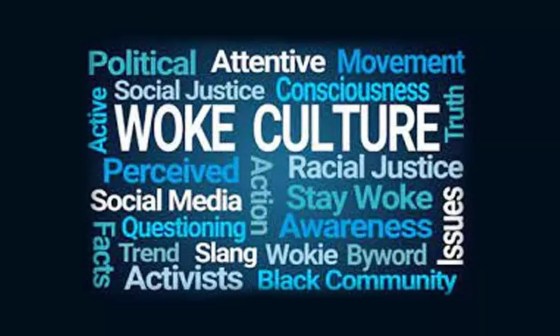
Woke
“Wokeism” began as a call in African American communities to “stay woke” against racial injustice, later expanding to include gender, class, environment, and identity struggles. Today, it sits at the center of a global culture war—embraced by some as a moral compass for equality, and criticized by others as rigid ideology and cancel culture. In the U.S., it influences politics, media, and corporations, sparking both reform and backlash. Globally, its meanings vary, but the debate it fuels—justice versus tradition, equality versus freedom—remains one of the defining conversations of our time.
A “Love-Thy-Neighbour” Economy (LTN): a model for growth, flourishing, and enoughness
What if economics were grounded not in endless growth or class struggle, but in the simple command: “Love thy neighbour as thyself”? A “Love-Thy-Neighbour Economy” would place human dignity, solidarity, and stewardship at the centre of production and exchange. Rather than chasing GDP alone, it would measure success through health, education, meaningful work, and community trust—closer to Bhutan’s Gross National Happiness than to Wall Street’s indices. Growth might appear slower on paper, but the gains in resilience, fairness, and joy could be far greater. Thinkers from Aristotle to Amartya Sen, Marx to Martha Nussbaum, Gandhi to E.F. Schumacher, all in different ways gestured toward such a vision: economics as a means to human flourishing. It is not utopia; elements already exist in cooperatives, wellbeing budgets, and community care systems. What remains is the will to weave them together around love as our moral compass.
Love
“Everyone and everything in this world is love-worthy because everyone and everything is a form assumed by God.”
Drop that Mask – Know and Tell!
Professor Seshan Ramaswami reflects on how students reveal their authentic selves in pre-course introductions but often hide behind masks once classes begin. He urges students—and faculty alike—to drop these facades, embrace vulnerability, and connect genuinely. College years, he reminds us, are the best time to discover who we are and to express that openly. By daring to share experiences, strike up conversations, and engage with strangers, we not only learn more about others but also uncover hidden truths about ourselves—ultimately leading to confidence, connection, and a richer, more meaningful life.

The Love We Withhold: Movie Review of Jolly LLB 3
Zan, zar, zameen – meaning women, wealth, and land – have been considered the root cause of all strife. Men … More
 Know Thyself