
In a recent exchange with a friend, we debated whether AI’s poetic output can ever rival human expression. My friend challenged me to test it by letting an AI complete the last lines of my poem The Many Guises. The results surprised us both—not because AI mirrored my inner voice, but because it offered fresh closures that were just as valid, though from a more universal lens. This raises the question: is poetry about authentic self-expression, or is it about opening to perspectives beyond the self? Perhaps we are all but flux, wearing many guises.
Category: Nonduality (Advaita)
Maya – Maayera Antha Maayera (Lovely Song)
Maayera Antha Maayera The Telugu song “Mayera Antha Mayera” conveys a philosophical message that life’s experiences, people, wealth, relationships, and achievements … More
Dharma
“All Dharma is mere imagination because where there is only the One, where can there be any scope for Dharma. Make the slightest difference between yourself and God, then the head of Dharma rears up.”
This is not a rejection of Dharma, but a reminder of its contingency. Dharma operates within duality: seeker and sought, self and God. For the aspirant, Dharma purifies; for the realized, Dharma dissolves. Aphorisms are easy to misread—yet they point to the timeless truth of Advaita: where nonduality shines, categories collapse, leaving only the One without a second.
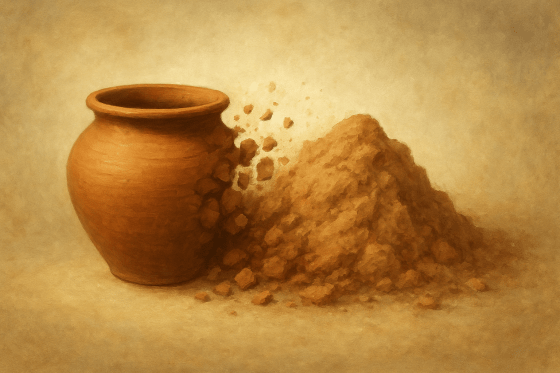
The Vedantic Concept of Name-and-Form
Vedanta teaches that the world is nothing but name-and-form, with Consciousness as its sole reality. Just as a pot is only clay appearing in a certain form, this universe is only God appearing as countless names and forms. The sense of an individual “I” too is merely a thought-form within Consciousness. When this truth is realized, doership dissolves, sorrow ends, and one discovers that true happiness lies not outside but in the Self, which is ever free, blissful, and divine.

What is God, Truth, Reality — Name and Form in Vedanta: Why Only Consciousness Is Real
Vedanta teaches that the world is nothing but name-and-form superimposed on the one reality — Consciousness (Brahman, God). Just as a pot is only clay in a particular form, so too all experiences are appearances of Consciousness. The sense of “I” as a separate doer is itself another name-and-form. Realizing this truth dissolves separation, ends sorrow, and reveals our nature as pure bliss. Using analogies such as clay-pot, gold-ornament, and wave-water, this article explores how Vedanta answers common spiritual doubts and points us to the oneness of existence.

Of What Use are the Sciences and the Humanities?
The natural sciences, such as physics, chemistry, biology, etc., anyway deal with matter and how to advance life and make … More
Why is it difficult to wake up from this dream called life?
The reason we do not want to wake up is that we find or think that the dream is really … More
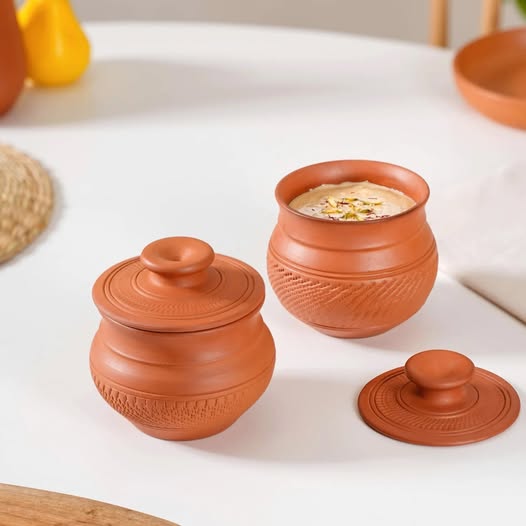
Conversation between a male pot and female pot
Male Pot (MP): I loved you ever since I laid my eyes on you. Female Pot (FP): Me, too. But … More
Sin
“Birth is the only sin.”
From Metaphysical Weariness to Self-Realization
There are moments in life when fatigue runs deeper than the body or mind—it’s a weariness of existence itself. Not depression, not despair, but a quiet recognition that life as we know it may be part of a grander cosmic play. In this exchange, I explore this metaphysical tiredness through the lens of Advaita Vedanta and the teachings of Ramana Maharshi, Nisargadatta Maharaj, and J. Krishnamurti. What emerges is a simple yet profound daily contemplative routine—an invitation to step beyond egoic striving and rest in pure Awareness, where true happiness and freedom reside.
 Know Thyself