
Of the three gunas that constitute all of manifest existence, Sattva — the quality of luminosity, harmony, and knowledge — is the most seductive bondage. Unlike Tamas, which crushes, or Rajas, which burns, Sattva seduces with bliss, ethical refinement, and the pleasures of understanding. Ramakrishna’s parable of the three robbers captures this with surgical precision: the sattvic robber alone unties the traveller and shows him the path home — but does not take him there. The finest veil is still a veil.
The Mundaka Upanishad’s distinction between Apara Vidya — all systematized human knowledge, from the sciences to the humanities — and Para Vidya, the knowledge by which the Imperishable is realized, frames this predicament with extraordinary clarity. No accumulation of apara vidya, however refined and sattvic, can answer the question the Upanishad’s Shaunaka poses at the outset: by knowing what does everything become known? That question dissolves the knower, and no object of knowledge can accomplish that.
Ramana Maharshi, Nisargadatta Maharaj, and J. Krishnamurti — approaching from different angles — converge on a single insight: the final obstacle to liberation is not ignorance or desire, but the subtle, luminous, deeply respectable self that knows.
Tag: Ashtavakra Gita
Chapter 15 of Ashtavakra Gita
(Source: Ashtavakra Gita translation by John Henry Richards) Ashtavakra said: While a man of pure intelligence may achieve the goal … More
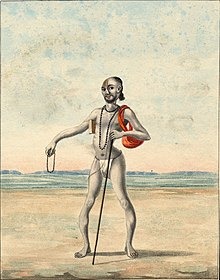
Side Effects of Truth
“This knowledge of the Truth turns an eloquent, clever and active person into being silent, seemingly stupid, and inactive. Therefore … More
Two Quotes to Contemplate On
“The only language able to express the whole truth is ‘silence’.”—Ramana Maharshi “This knowledge of the Truth makes an eloquent, … More
Ashtavakra Gita – Swami Sarvapriyananda
Note that the ordering of the videos in this Playlist is a bit off. So, play them in order manually.
 Know Thyself