
Of the three gunas that constitute all of manifest existence, Sattva — the quality of luminosity, harmony, and knowledge — is the most seductive bondage. Unlike Tamas, which crushes, or Rajas, which burns, Sattva seduces with bliss, ethical refinement, and the pleasures of understanding. Ramakrishna’s parable of the three robbers captures this with surgical precision: the sattvic robber alone unties the traveller and shows him the path home — but does not take him there. The finest veil is still a veil.
The Mundaka Upanishad’s distinction between Apara Vidya — all systematized human knowledge, from the sciences to the humanities — and Para Vidya, the knowledge by which the Imperishable is realized, frames this predicament with extraordinary clarity. No accumulation of apara vidya, however refined and sattvic, can answer the question the Upanishad’s Shaunaka poses at the outset: by knowing what does everything become known? That question dissolves the knower, and no object of knowledge can accomplish that.
Ramana Maharshi, Nisargadatta Maharaj, and J. Krishnamurti — approaching from different angles — converge on a single insight: the final obstacle to liberation is not ignorance or desire, but the subtle, luminous, deeply respectable self that knows.
Tag: Non-duality
“You Cannot Save a World You’re Still Trapped In” — Nisargadatta Maharaj on Desire, Help, and Liberation
What does it truly mean to help the world? In this piercing dialogue from I Am That, Nisargadatta Maharaj dismantles our noblest intentions — revealing that the urge to save others is itself rooted in the same ignorance that creates suffering. Desire builds worlds; worlds breed pain; and the one who wishes to help is often the one most in need of waking up. From the nature of creation to the limits of avatars and saviours, Maharaj offers something more radical than solutions: a mirror. “Get out of the picture,” he says, “and see whether there is anything left to save.”
Psychiatrists Are Now Teaching What Ancient India Knew 3,000 Years Ago—and It Could End Your Suffering (The Non-Issue of Body-Mind)
There is a question so deceptively simple that most of us never think to ask it: when pain arises in the body or sorrow rises in the mind, who is it that is aware of the pain? Who is watching the sorrow?
We are so habituated to collapsing the observer into the observed — to saying “I am sad” instead of “sadness is arising” — that the distinction seems merely grammatical. But this small grammatical shift conceals one of the most profound insights ever articulated by human civilization, and it is an insight that has now been independently arrived at by the ancient wisdom traditions of India and by cutting-edge clinical psychiatry and psychology in the West.
The central claim is this: you are not your body-mind and its fluctuating states. You are the Consciousness that is aware of those states. And learning to rest in that awareness — to become the witness rather than the sufferer — is the gateway to the deepest peace available to a human being.
Modern psychiatry calls it the “observing self.” Advaita Vedanta calls it sakshi-chaitanya. The Stoics called it prosoche. They are all pointing at the same truth — and that truth could change everything.
Spiritual Path Simplified: A Guided Journey Through Advaita and Self-Realization
This post presents a distilled guide to understanding the spiritual journey through the lens of Advaita Vedanta. It brings together 12 essential writings that explain the nature of reality as name-and-form, the illusory role of the ego, and the discovery of inner happiness. Readers are encouraged to explore each linked article while keeping in mind three key insights: the world is an appearance, the ego is not the thinker-doer, and true happiness lies within. For deeper study, the book “Happiness & Consciousness” is recommended as a concise yet comprehensive companion.
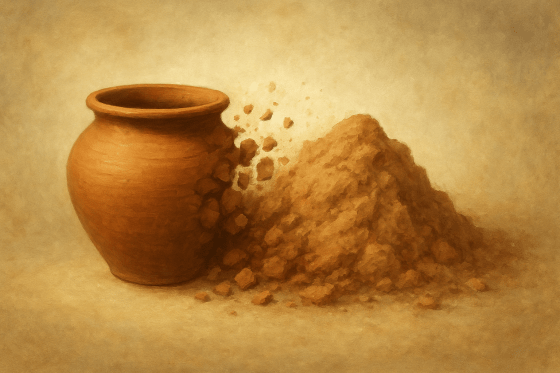
The Vedantic Concept of Name-and-Form
Vedanta teaches that the world is nothing but name-and-form, with Consciousness as its sole reality. Just as a pot is only clay appearing in a certain form, this universe is only God appearing as countless names and forms. The sense of an individual “I” too is merely a thought-form within Consciousness. When this truth is realized, doership dissolves, sorrow ends, and one discovers that true happiness lies not outside but in the Self, which is ever free, blissful, and divine.

What is God, Truth, Reality — Name and Form in Vedanta: Why Only Consciousness Is Real
Vedanta teaches that the world is nothing but name-and-form superimposed on the one reality — Consciousness (Brahman, God). Just as a pot is only clay in a particular form, so too all experiences are appearances of Consciousness. The sense of “I” as a separate doer is itself another name-and-form. Realizing this truth dissolves separation, ends sorrow, and reveals our nature as pure bliss. Using analogies such as clay-pot, gold-ornament, and wave-water, this article explores how Vedanta answers common spiritual doubts and points us to the oneness of existence.
 Know Thyself