
What does it truly mean to help the world? In this piercing dialogue from I Am That, Nisargadatta Maharaj dismantles our noblest intentions — revealing that the urge to save others is itself rooted in the same ignorance that creates suffering. Desire builds worlds; worlds breed pain; and the one who wishes to help is often the one most in need of waking up. From the nature of creation to the limits of avatars and saviours, Maharaj offers something more radical than solutions: a mirror. “Get out of the picture,” he says, “and see whether there is anything left to save.”
Tag: Spiritual Wisdom

Beyond Words: Silence as the Highest Expression of Truth
Ramana Maharshi declared, “The only language able to express the whole truth is silence.” In Advaita Vedanta, the Self is beyond knowledge and ignorance, beyond light and darkness. Words divide, but silence holds unity. Ramana’s presence itself was a teaching—those who sat with him often felt peace beyond explanation. Silence is not absence but fullness: the stillness in which the Self shines without obstruction. To abide in this silence is to realize that truth is not something to be reached but what we already are—pure being, ever free. Explore Ramana Maharshi’s teaching that silence is the highest expression of truth in Advaita Vedanta, where words fail but being alone remains.
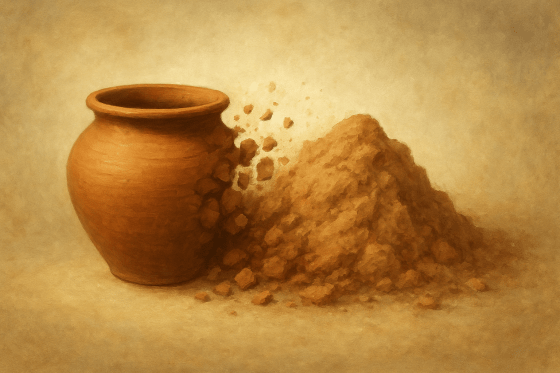
The Vedantic Concept of Name-and-Form
Vedanta teaches that the world is nothing but name-and-form, with Consciousness as its sole reality. Just as a pot is only clay appearing in a certain form, this universe is only God appearing as countless names and forms. The sense of an individual “I” too is merely a thought-form within Consciousness. When this truth is realized, doership dissolves, sorrow ends, and one discovers that true happiness lies not outside but in the Self, which is ever free, blissful, and divine.
 Know Thyself