
Sonam Wangchuk stands as a moral compass in a time when dissent is under siege. In our co-authored piece for The Wire, we argue that his peaceful resistance—anchored in Gandhian ideals and ecological wisdom—embodies the conscience of modern India. Wangchuk’s fasts and climate-focused activism are not acts of rebellion but acts of restoration: of truth, environment, and democracy itself. His story is a mirror to the nation’s soul, reminding us that silence is complicity, and courage is the truest form of love for one’s country.
Category: Political Philosophy
The puzzle of the ‘idiot savant’
Even now, when we operate with the more inclusive category of neurodivergence as opposed to pathology, savantism’s rarity and precocity … More
When I first Came to the US two Political Issues Unexpectedly Disturbed Me
by Pranab Bardhan, an Emeritus Professor at Berkeley, with main interest in Political Economy, Global Affairs with special focus on … More
I Have Paid My Dues to This World
I feel like I have paid my dues to this world. How so? Firstly, I have fulfilled my duty towards myself … More
Political Philosophy as if the Neighbour Mattered
In an age of rising inequality and social fracture, Political Philosophy as if the Neighbour Mattered reimagines governance around one timeless principle — love thy neighbour as thyself. This framework transforms moral empathy into measurable public policy, proposing a “Loving Republic” where care becomes infrastructure, justice is restorative, and every law passes the “neighbour impact” test. Drawing from thinkers across civilizations — from Bhishma and Confucius to Rawls, Gandhi, and Habermas — it offers a practical constitutional model for inclusive, ecological, and compassionate governance that treats the good society not as an abstraction, but as a shared moral practice.
What is Political Philosophy? From Plato to Strauss
“All political action aims at either preservation or change. When desiring to preserve we wish to prevent a change to … More

Living the Dream Life
I realize this life, this world is a dream. I realize I am not the doer but God is the … More
Truth
“The tongue is too dumb to tell the truth one understands. Words are not it. One’s silence too cannot convey … More
Religiosity
“Until you knock the Hindu out of the Hindu, the Muslim out of the Muslim, the Christian out of the … More
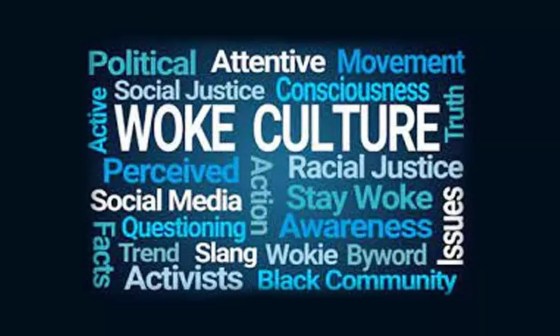
Woke
“Wokeism” began as a call in African American communities to “stay woke” against racial injustice, later expanding to include gender, class, environment, and identity struggles. Today, it sits at the center of a global culture war—embraced by some as a moral compass for equality, and criticized by others as rigid ideology and cancel culture. In the U.S., it influences politics, media, and corporations, sparking both reform and backlash. Globally, its meanings vary, but the debate it fuels—justice versus tradition, equality versus freedom—remains one of the defining conversations of our time.
 Know Thyself